


SMT Stencil 101: How to Pick the Perfect SMT Stencil for Your PCB 🛠️
 View
View
Buying a stencil seems simple, but the wrong specs can ruin your first-pass yield. To get a perfect solder finish every time, you need to master these three factors:
1. Thickness: The Volume Controller
The thickness determines exactly how much paste is deposited onto your pads.
- The Rule: High-density boards with fine-pitch BGAs/QFNs (0.5mm pitch) require thinner stencils to avoid bridging. For larger components, go thicker for better joint strength.
- Pro-Tip: If your board has mixed densities, you can adjust the "Solder Paste" layer in your CAD software (1:1 for general pitch, -10% for fine-pitch) to optimize paste volume without the high cost of localized thinning.
2. Material: Why Stainless Steel Wins
While copper is an option, Stainless Steel is the industry favorite for a reason.
- Durability: It offers higher hardness and a much longer service life.
- Precision: It's the best material for clean, burr-free laser cutting, ensuring the paste releases smoothly every single time.
3. Size: Framed vs. Frameless
Your stencil size is about more than just your PCB dimensions—it’s about your workflow.
- Framed Stencils: Best for automated lines. Ensure the stencil outline matches your printer's mounting requirements.
- Custom Frameless Stencils: Perfect for prototypes! If your board is under 10x10cm, don't waste money on a massive framed sheet.
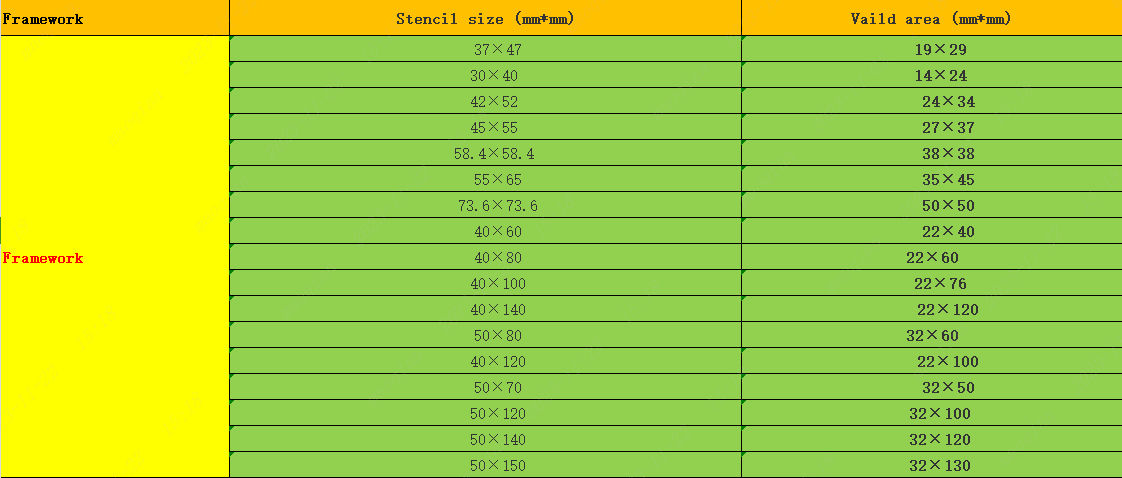
Below this text you can find commonly used specifications and sizes at JLCPCB about framed stencil:
🚀 JLCPCB Advantage: We support customized sizes for frameless stencils starting at only $3! They are lightweight, easy to store, and can even ship with your PCBs to save on freight.

Quality assembly starts with the right stencil.
💰 Precision laser-cut stencils starting at $3!
Sign In Or Register Comment after
No comments yet. Be the first to comment!